Decolonization, Textile Healing, and Social Justice in Fashion and Design
The Fashion and Styles department at the IKL of the Academy of Fine Arts, the Department of Humanities and Arts/ Fashion Design at the University of Namibia, and the Department of Fashion Design at the Faculty of Arts, Design, and Architecture at the University of Johannesburg launched a collaboration in spring 2023 under the banner “Decolonizing Fashion Research, Textile Healing, and Social Justice” with the support of the Academy’s International Office and the EU program ERASMUS+ International Credit Mobility.
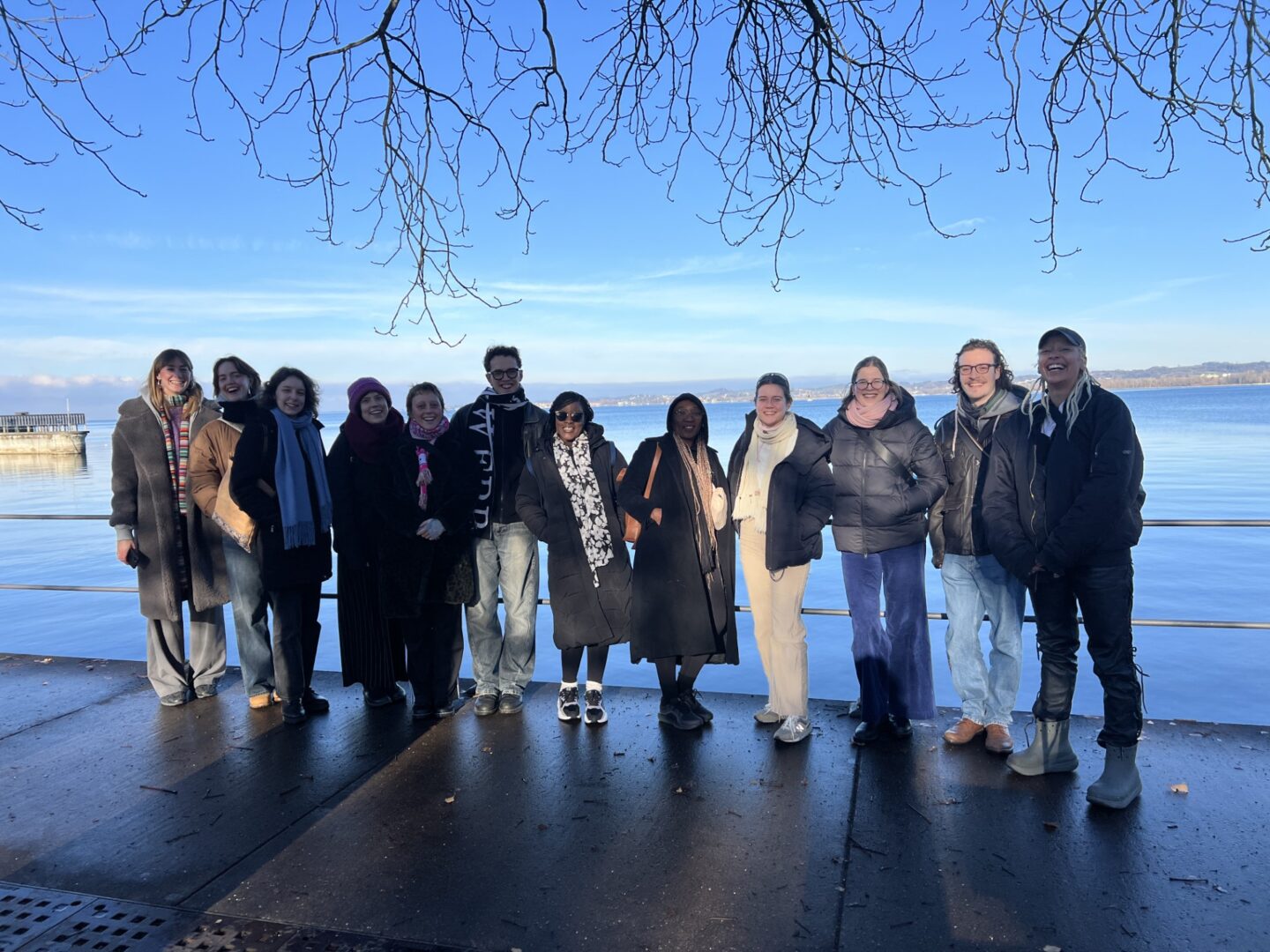
University of Namibia at Lake Constance in December 2024
©AnnaHambira
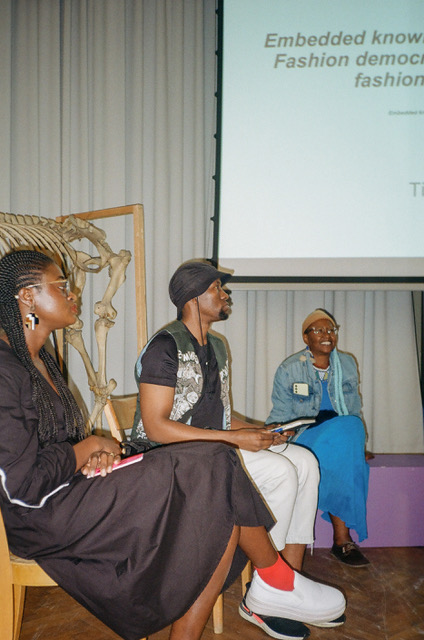
at the Re-Vision Fashion symposium in June 2024
©AnnaHambira
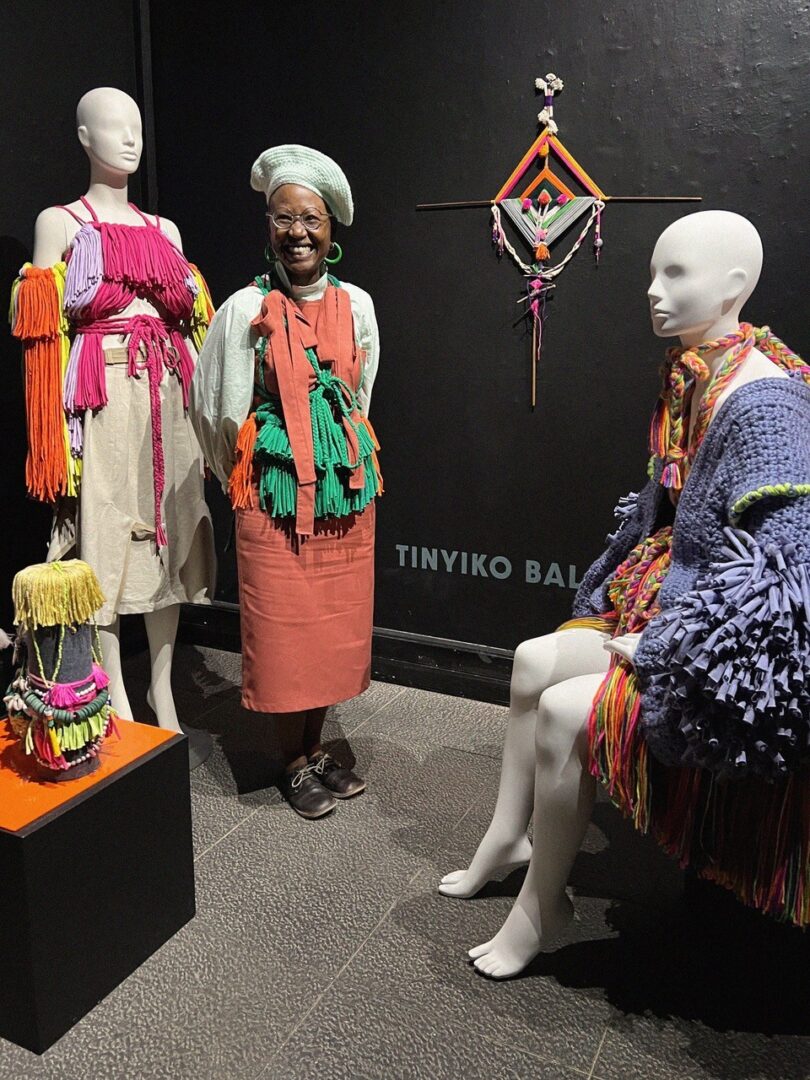
After the joint project application received funding from the EU’s ERASMUS+ International Credit Mobility program, an intensive collaboration between lecturers from the three institutions began, starting with online and then hybrid formats. In the summer of 2024, Kimberly Bediako (lecturer, Department of Fashion Design, researcher), Tinyiko Baloyi (lecturer, Department of Fashion Design, researcher, artist), and Khaya Mchunu (associate professor, head of the Department of Fashion Design, researcher, designer) from the University of Johannesburg were the first to visit the Academy of Fine Arts.
All three colleagues are fashion designers and experts in design/fashion studies and design education, with a focus on social justice and decolonization. In addition to guest lectures and workshops for students and interested teachers, exhibition visits, studio visits to local Black artists (Jojo Gronostay; amaaena, among others) and active participation in the “Re-vision Fashion” conference, the collaborative hybrid format GLOBAL CLASSROOM was created. In line with the democratization of education and the generation of contemporary decolonial global design and fashion knowledge, the GLOBAL CLASSROOM offers lectures, workshop formats, and courses to a broad international audience via low-threshold audio and video productions.
During winter 2024, Elke Gaugele, Sarah Held, Anna Hambira, and David Eisner welcomed the faculty members from the University of Namibia. Maria Caley (fashion and textile studies lecturer, researcher) and Loini Iizyenda (fashion and textile studies lecturer, researcher) accompanied the Fashion and Styles Team on a students’ excursion to Bregenz, Hittisau, and Lustenau. At the Women’s Museum in Hittisau, the group reflected on the local perspectives on gender, craftsmanship, and design presented there. They discussed exhibition practices, explored the history of Vorarlberg embroidery, and found another common point of reference in the “Myth of Craftsmanship” exhibition at the Vorarlberg State Museum.
In hybrid GLOBAL CLASSROOMS, Maria Caley and Loini Iizyenda gave workshops, held lectures at the Academy of Fine Arts, and produced podcast episodes in collaboration with the Fashions and Styles Team on textile objects restituted to Namibia, which were part of the Berlin Ethnological Collections. They also presented their work in the selection and repatriation of the textiles to Namibia, in which both were significantly involved. Another focus of the fashion designers’ work is textiles and bead work, which historically have great transgenerational significance and healing powers in Namibia.
The collaboration between the three universities continued to grow, and as part of the joint, planning for the Fashion and Styles team’s counter visit to Namibia and Johannesburg, Anna Hambira was also invited to give a digital guest lecture at the University of Johannesburg (Fashion Department).
GLOBAL CLASSROOM Video Playlist
GLOBAL CLASSROOM Podcast
©AnnaHambira
©AnnaHambira
©AnnaHambira
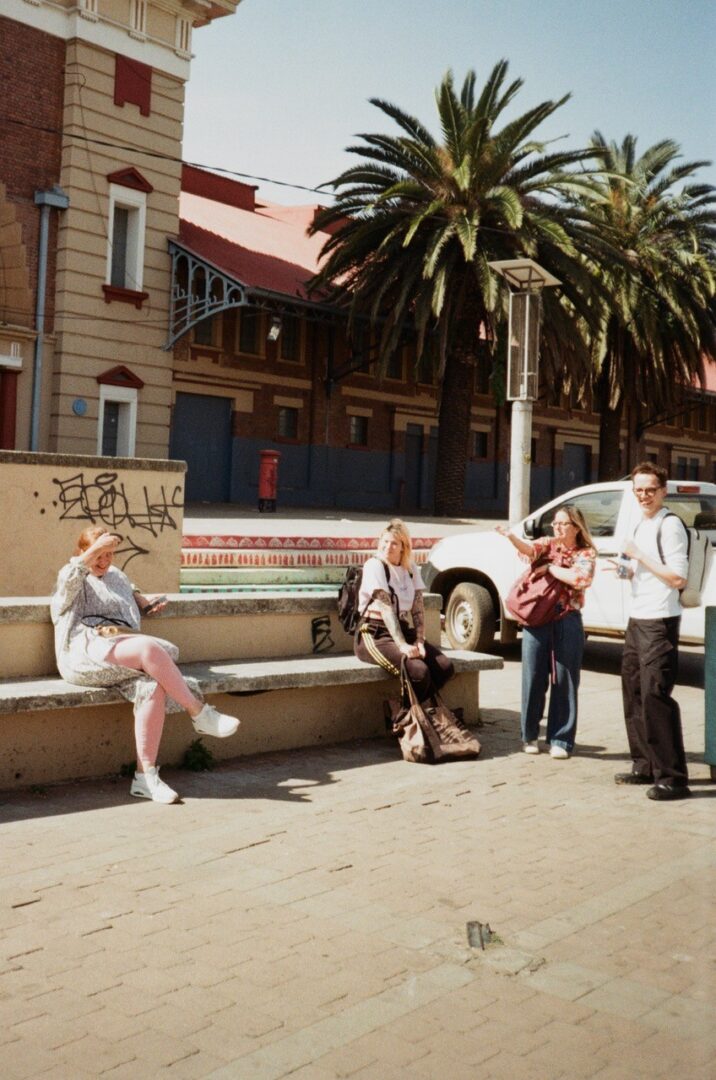
In the fall of 2025, the team from the University of Johannesburg welcomed Elke Gaugele, Sarah Held, Anna Hambira, Constanze Pirch, and David Eisner from the Academy of Fine Arts in South Africa.
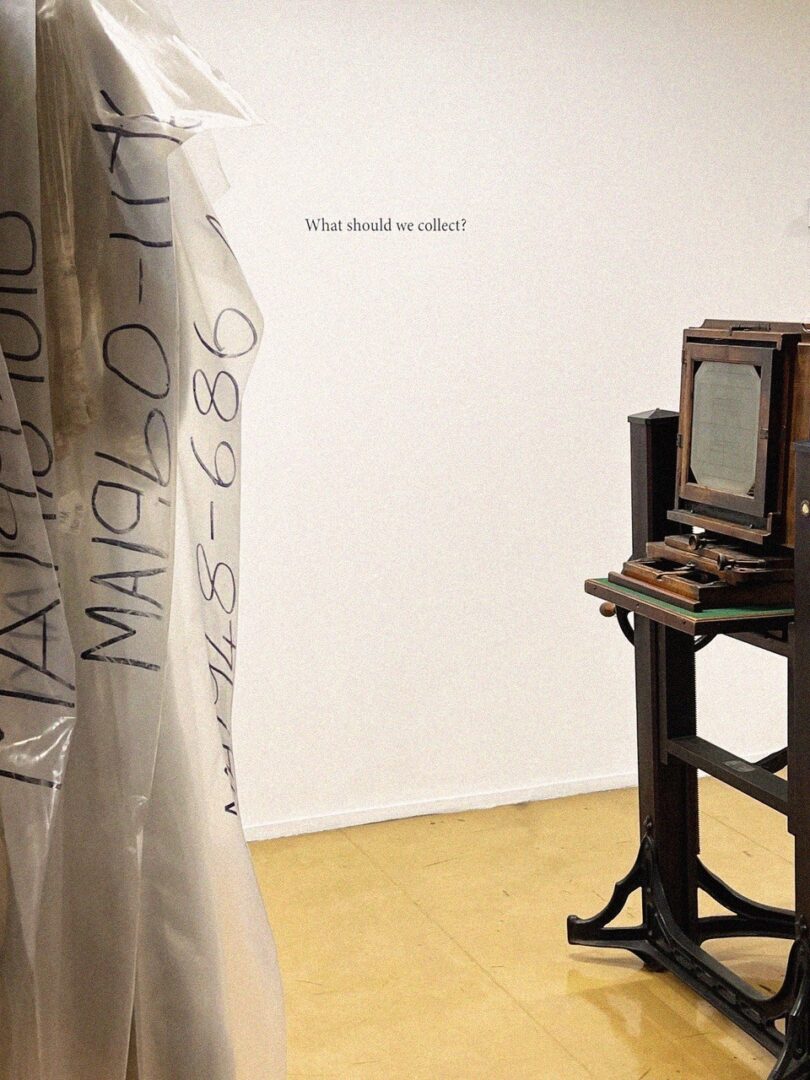
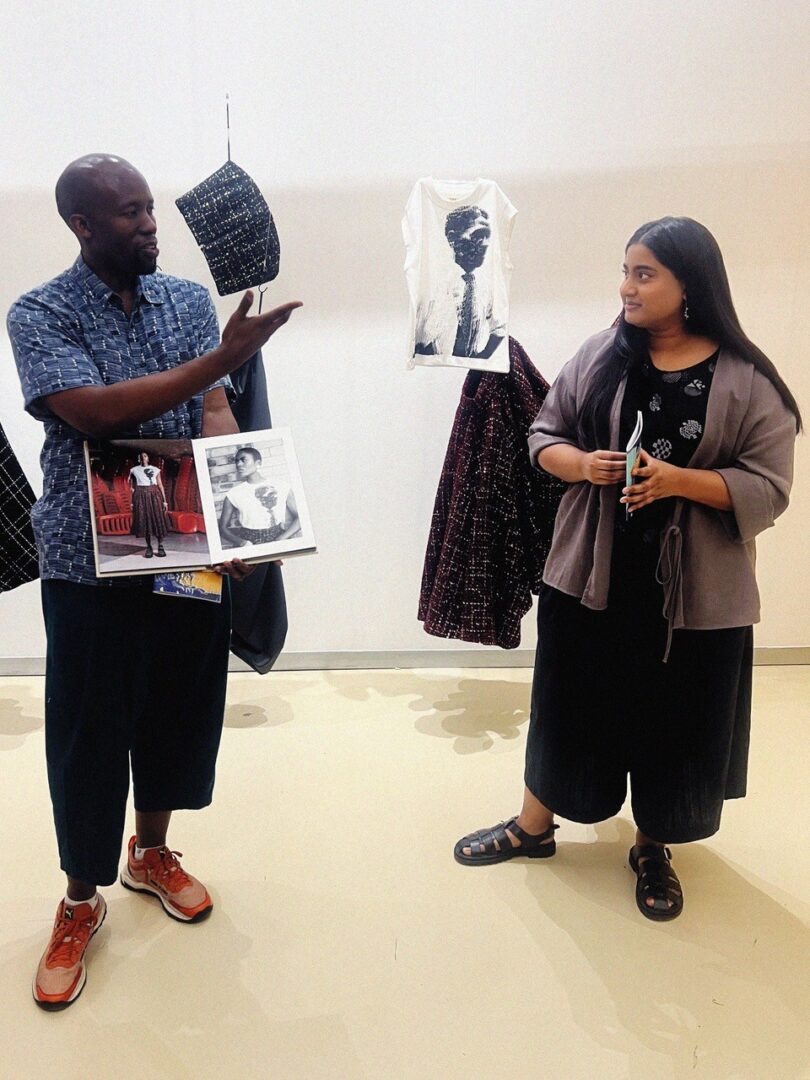
Visits to the GALA Archive, which is focused on queer history in southern Africa, and the South African History Archive allowed the team to gain insight into the struggles and counter strategies of various local communities and view artifacts of resistance. During a joint visit to the “Fashion Accounts” exhibition at the Museum Africa, Erica de Greef from the African Fashion Research Institute (AFRI) shared important perspectives on the curatorial work involved in decolonizing fashion and textile collections in South Africa, which is made visible and tangible here through speculative design and critical artistic displays. This continued during a visit to the IMPACT IS A VERB exhibition at the Faculty of Arts, Design, and Architecture at the University of Johannesburg, where many new contacts among creatives and researchers were made.
Again, the artistic and scientific positions of the colleagues impressed with their intensive examination of colonial structures and the violent history of apartheid, as well as with their powerful aesthetics, contributing to the active decolonization of institutional and social spaces as contemporary activist tools. Elke Gaugele and Sarah Held gave a lecture as part of the DESIS lecture series: The Far- Right’s Weaponization of Fashion, Style and Homeland in the 4IR on the current FWF research project “Fashion and the Far-Right”.
At the same time, Constanze Pirch and David Eisner joined colleagues from the University of Johannesburg to attend the 2025 Design Education Forum of Southern Africa Conference. There, Africa’s emancipation and the continent’s detachment from the Eurocentric canon also shaped the academic contributions and the understanding of education and society for future generations.
This shift is also reflected in the conference topics: Design + Digital Disruptions and Technology / Design+ Societal Realities, Impact and Cultural Preservation / Design+ Sustainability and Future-Focused Design linked to Embedded Knowledge, Cultural Heritage Archives, Native Design Languages, Decolonial Design History and Curriculum Development, AI, and Feminist Disruption.
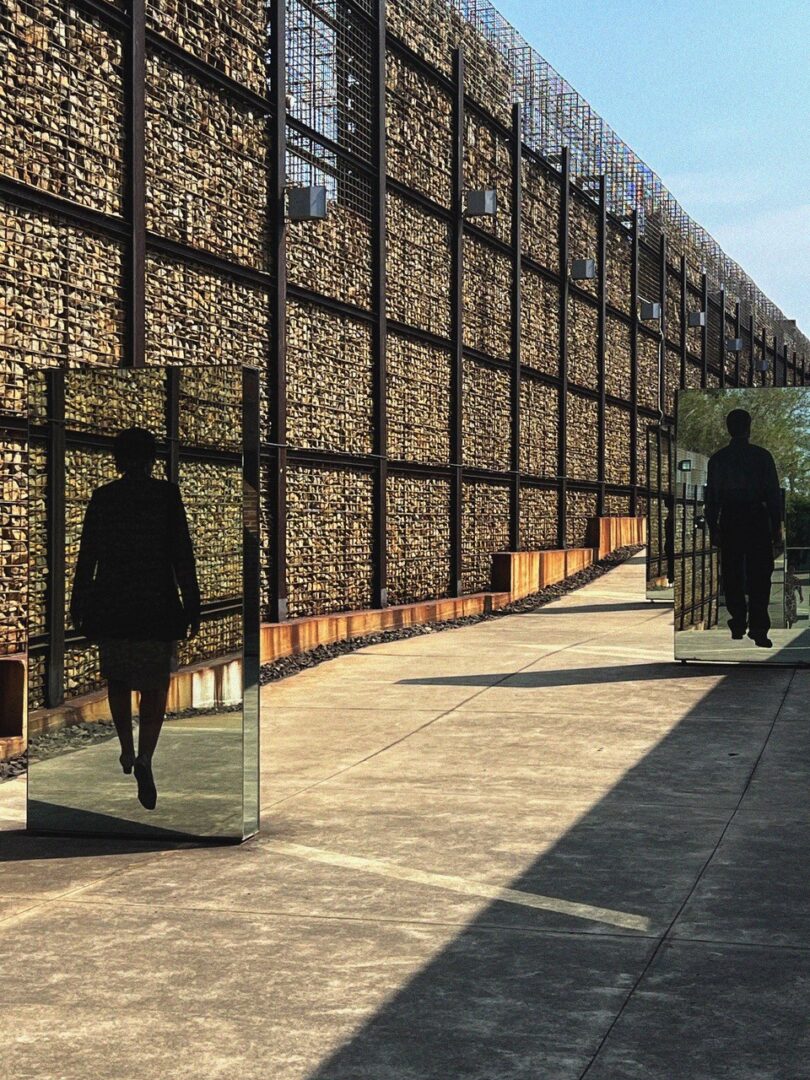
Meanwhile, Anna Hambira gave a follow-up lecture at the UJ based on her digital lecture (WS24) and joined in the feedback round for the final projects of the Fashion Department students. Together, the Fashions and Styles Team visited the impressively curated Apartheid Museum on civil resistance against the apartheid system.
Elke Gaugele, Sarah Held, David Eisner, and Constanze Pirch concluded their visit by visiting the Cultural Forum Austria in Pretoria to discuss future collaboration with the project. After 10 days filled with reflection, exchange, in-depth discussion of joint topics, and planning for further collaboration, the Fashions and Styles Team set off for Windhoek in neighboring Namibia.
GALA Archive
South African History Archive
Faculty of Art, Design and Architecture, University of Johannesburg
Exhibition IMPACT IS A VERB, FADA Gallery
Exhibition Fashion Accounts, Museum Africa
FWF research project “Fashion and the Far-Right”
2025 Design Education Forum of Southern Africa Conference
Apartheid Museum
GLOBAL CLASSROOM Podcast
GLOBAL CLASSROOM Video Playlist
©AnnaHambira
©AnnaHambira
©AnnaHambira
©AnnaHambira
©AnnaHambira
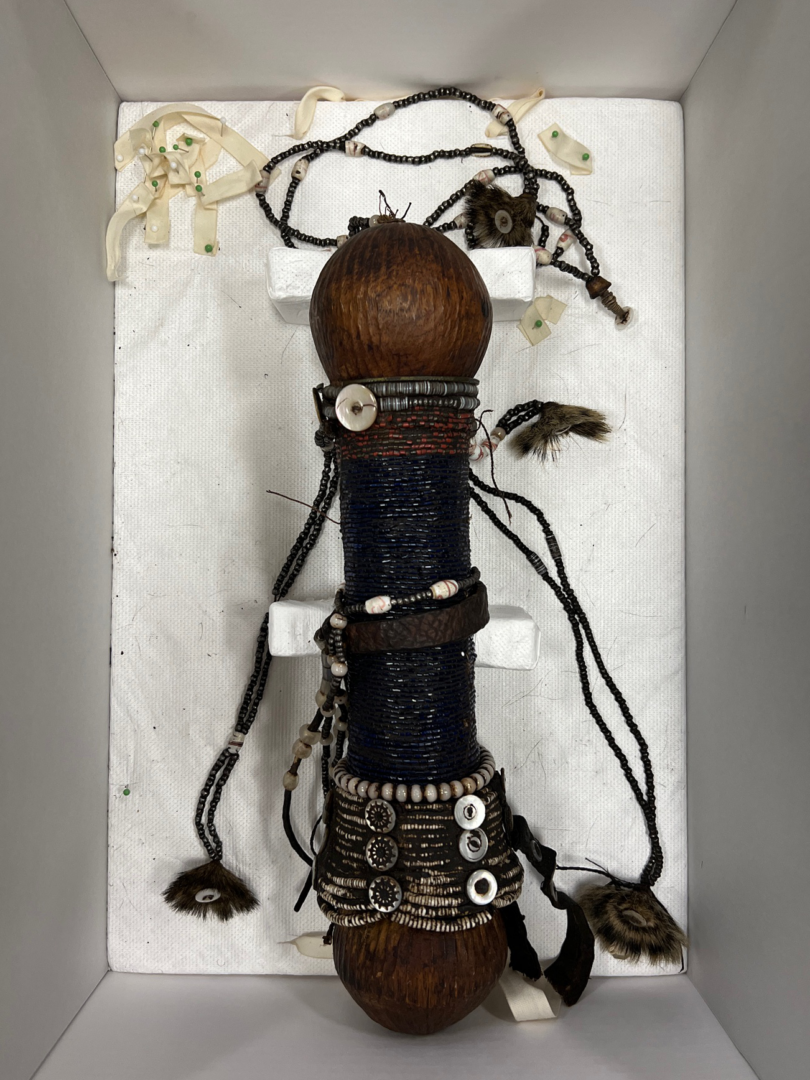
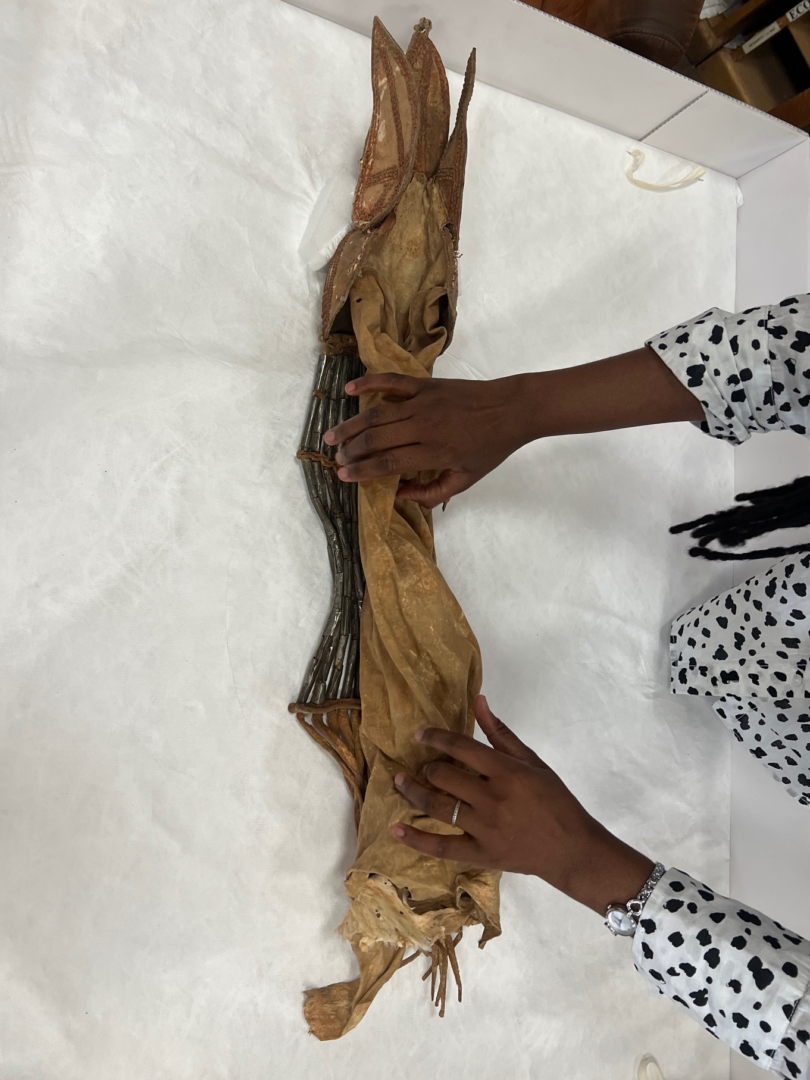
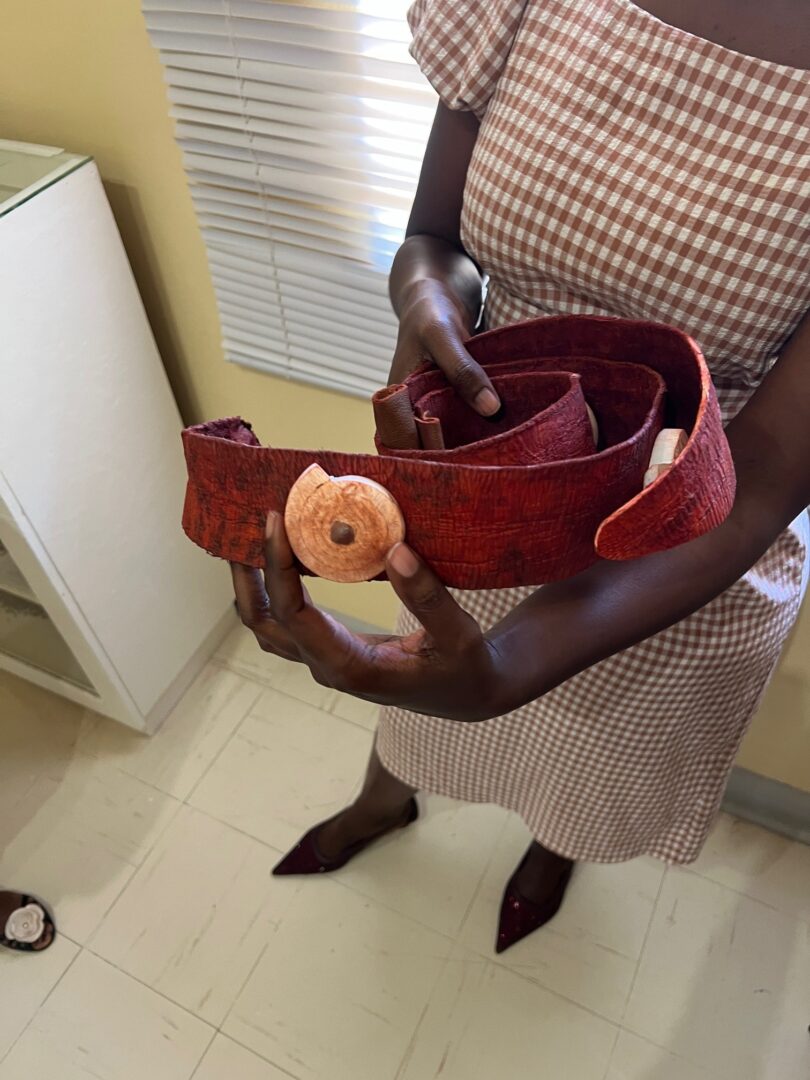
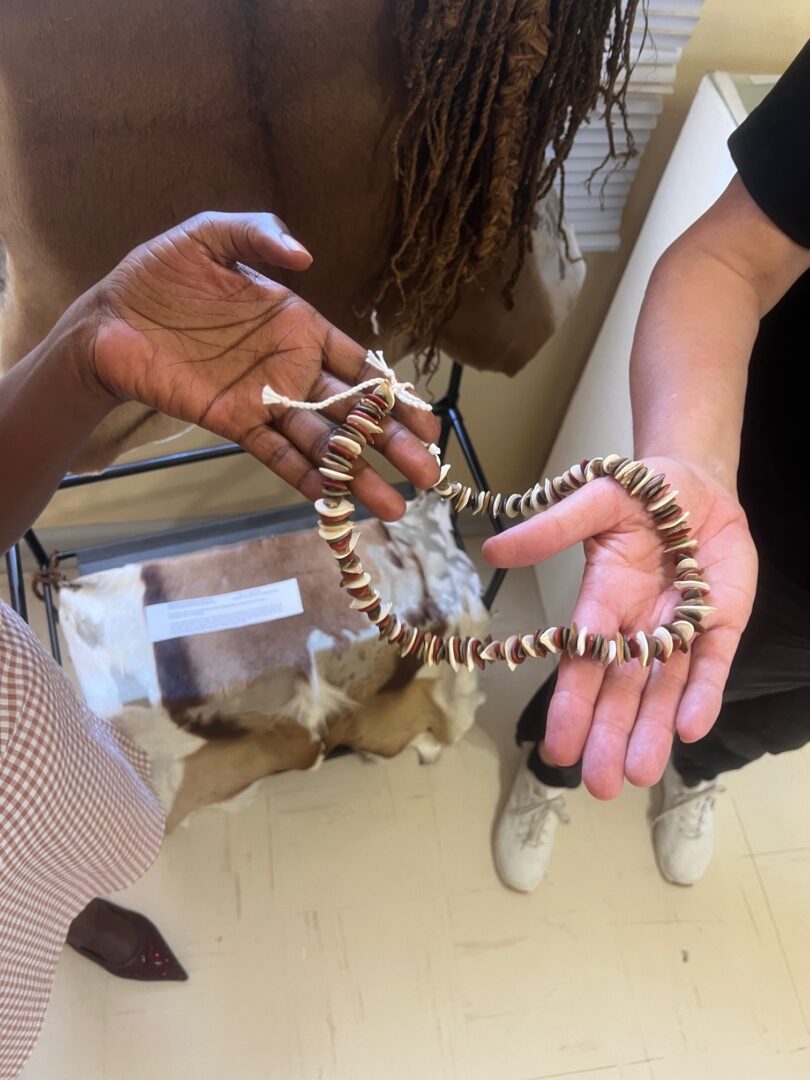
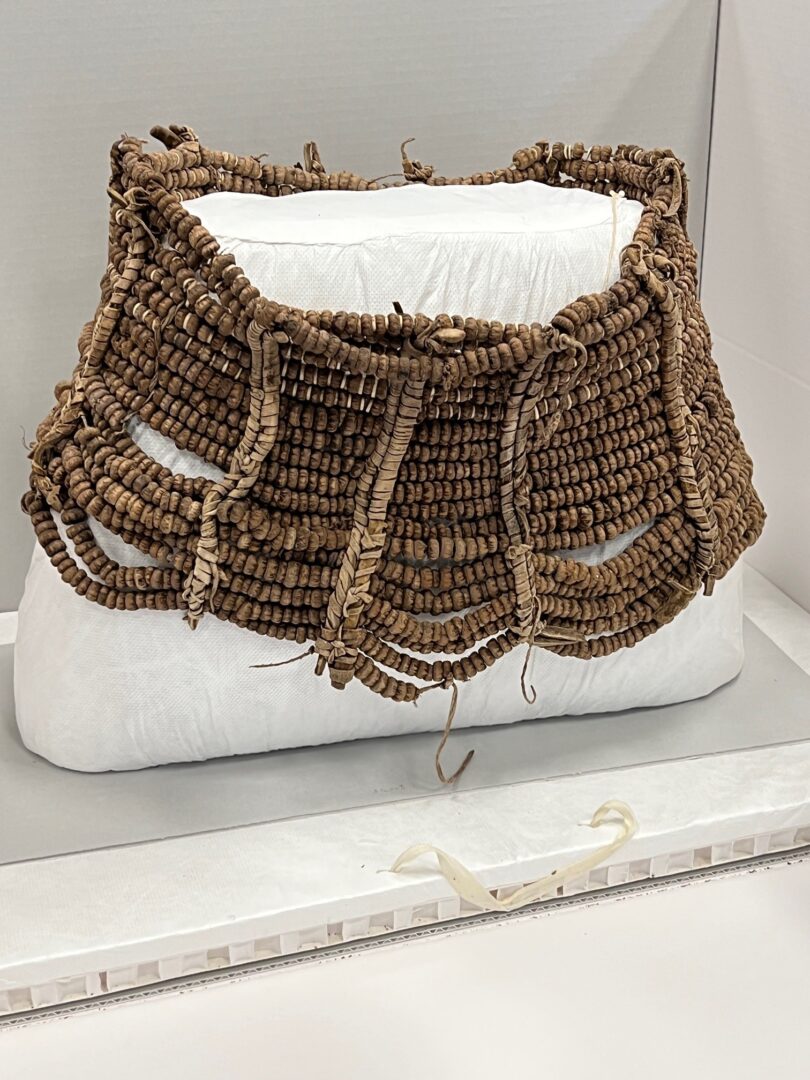
Following a welcome dinner in Windhoek with Loini Iizyenda, a faculty member at the University of Namibia, Akbild faculty members Constanze Pirch and Anna Hambira met with students from the Department of Humanities and Arts/Fashion Design at the University of Namibia for a joint lecture. In their collaboration, they linked interdisciplinary, practice-oriented topics such as art education in a school context with design practice and micro-entrepreneurship in the cultural sector, and reflected together with the students on problems and potential solutions. The Fashions and Styles team was invited to the Museum of Namibia by conservator Johanna Ndahekelekwa Ndjamba and Loini Izyinda to view objects recently restituted from the Berlin Ethnological Collections that had been stolen during the German colonial era. There, they gained insights into the complex historical, cultural, and restoration research required following the repatriation of pre-colonial clothing and jewelry. The team also encountered an object they were familiar with from stories told by their colleagues: Okadina, a noble wooden doll that Queen Olugondo of Ondonga had commissioned around 1900 for Anna, the daughter of the Finnish missionary Martti Rautanen, and had named after her (Okadinia). Dolls like this were called Okaana koshiti: they represented children and usually carried the name that the first child of a married couple was to receive.
At the same time, Elke Gaugele and Sarah Held did research at the National Archives of Namibia on the history of German colonization, forced labor, the concentration camps, and the genocide against the Ovaherero, Nama, and Damara from 1904 to 1908. In addition, they examined textile artifacts archived there: T-shirts from the civilian resistance during Namibia’s fight for independence. At the University of Namibia, they gave a lecture titled “Unraveling Supremacy: Far-Right Fashion and the Design of Protest, Education, and Democracy Across Continents.” Constanze Pirch established contact with Salinde William, who works in teacher education at the University of Namibia and teaches at Martti Ahtisaari Primary School in Katutura. She was invited to visit classes to gain insight into school practices and teacher education in Namibia.
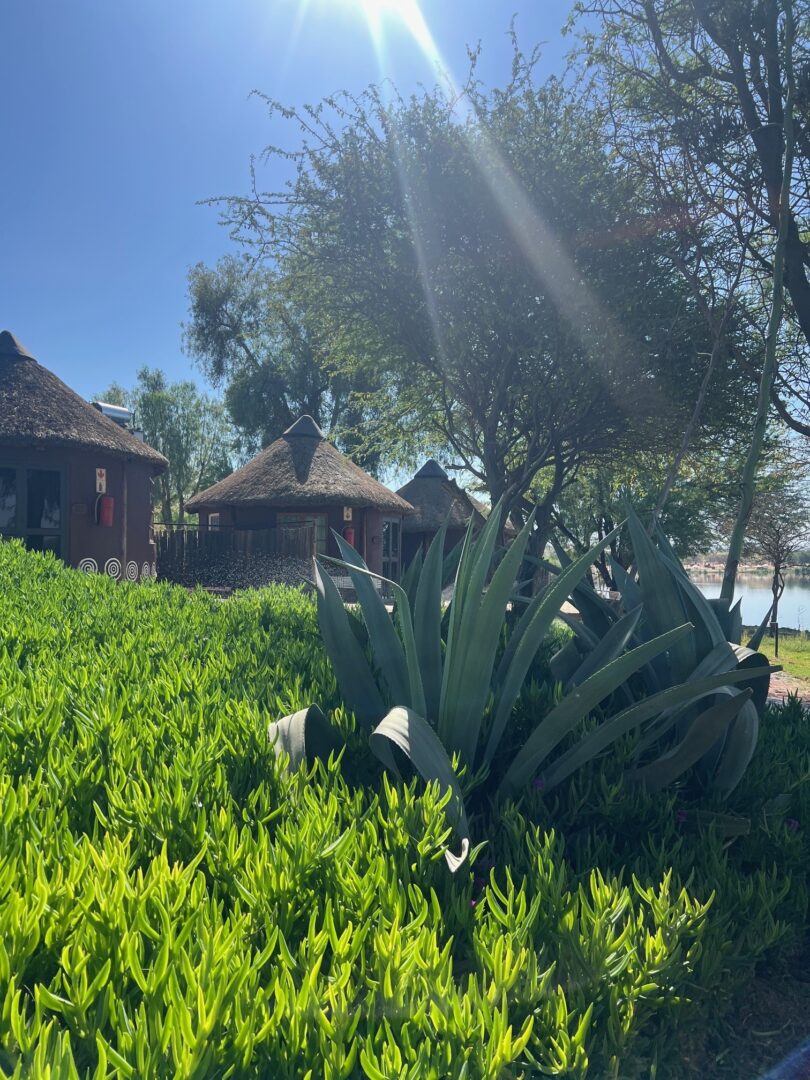
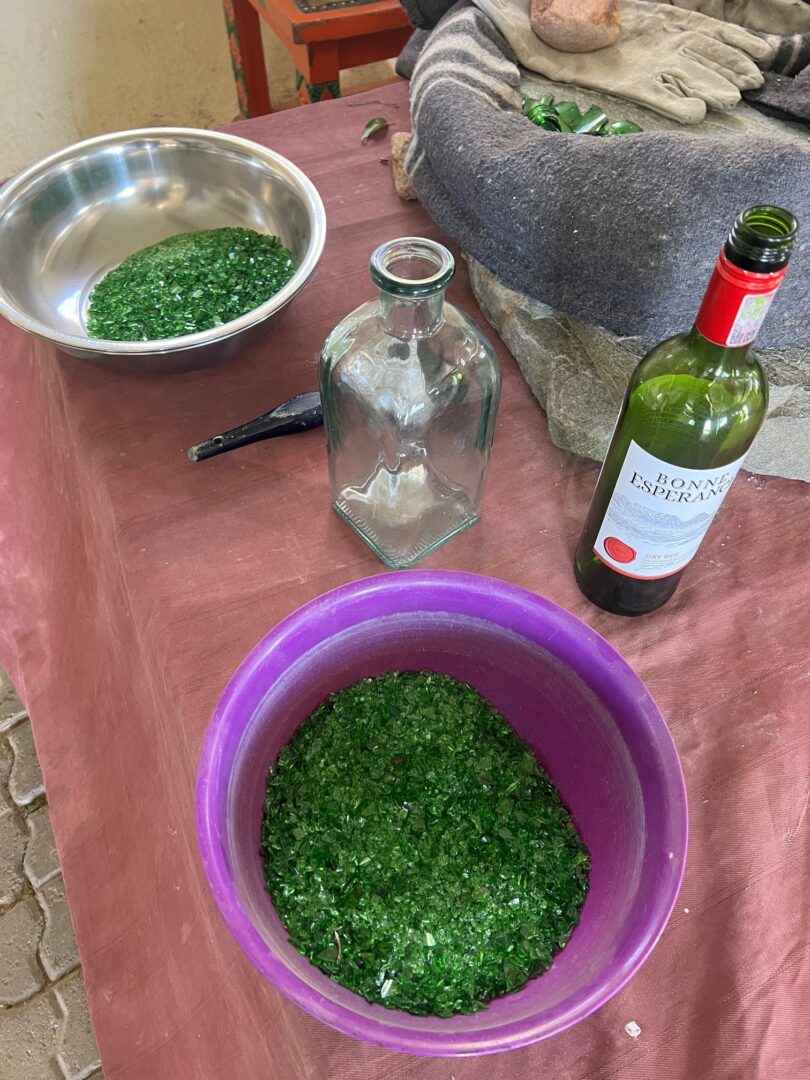
The Fashions and Styles team then visited an impressive community project, the Penduka Embroidery Village in Katutura. The project is dedicated to promoting textile craftsmanship, fostering creative expression, and empowering women economically in Namibia’s marginalized communities. Its focus is on the production of unique, high-quality handmade products. In addition to a strong focus on hand embroidery, glass bead products and pottery are also produced and sold.
Maria Caley and Loini Izyinda welcomed the Fashions and Styles team in Otjiwarongo, 250 km away. The Museum of Namibian Fashion is the first museum in Namibia dedicated to pre-colonial clothing. Our colleagues, who played a leading role in the museum’s development, guided us through the various exhibitions—covering themes such as Beads and Shells, Hair and Headdresses, Metal Accessories, and Textiles—alongside the current museum team, offering us insights into both contemporary and historical indigenous clothing practices. The joint tour is currently being edited into another GLOBAL CLASSROOM video episode and is scheduled to be released in collaboration with the museum.
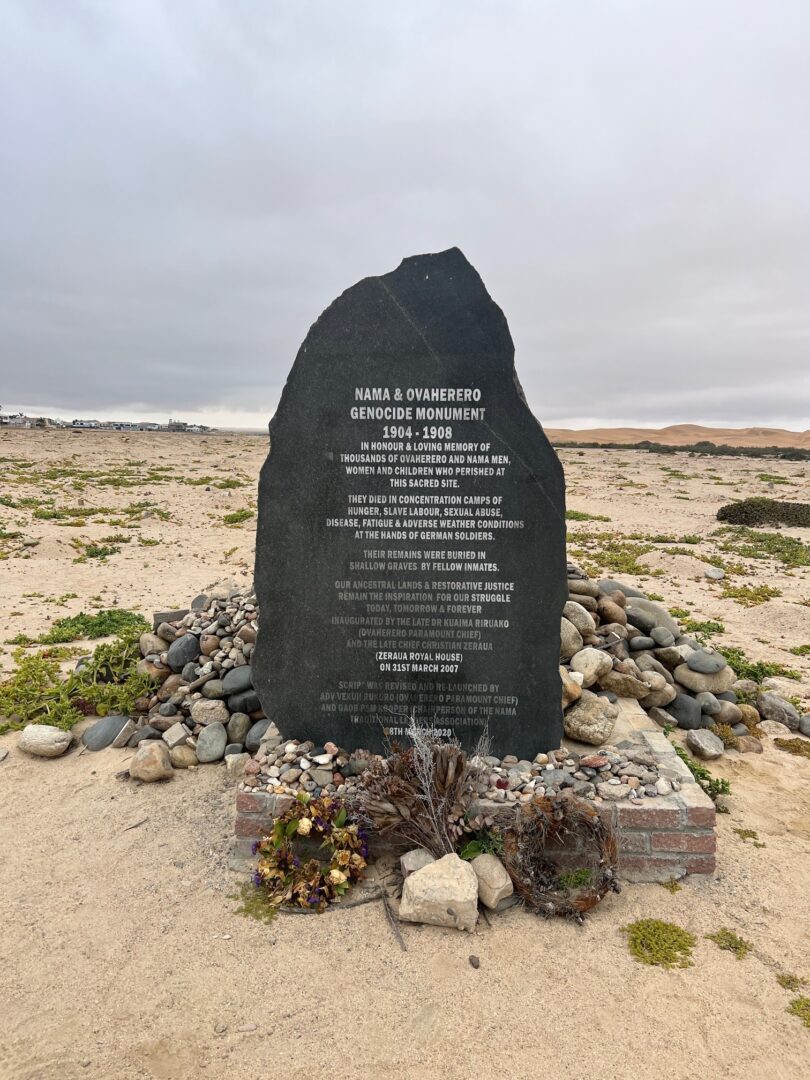
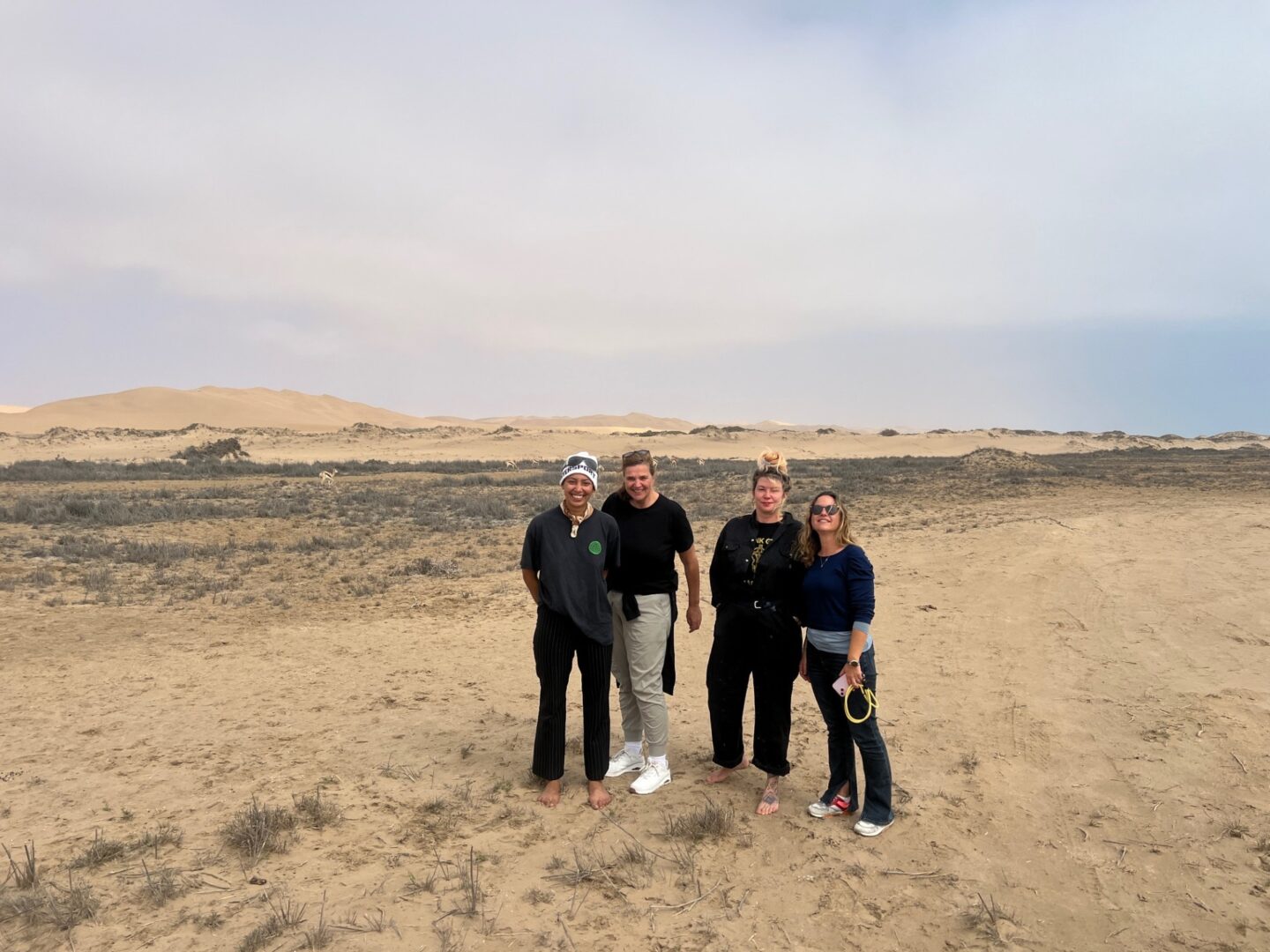
From Otjiwarongo, the Fashions and Styles team traveled through the Namib Desert to the coastal city of Swakopmund. The city’s colonial architecture and its violent history—including its concentration camp and central role in the genocide of the Ovaherero, Damara, and Nama peoples—once again confronted the Fashions and Styles team with the crimes of the German colonial power. In a encounter with local activist and artist Laidlaw Peringanda, who established the Genocide Museum, it became clear how strongly Namibia’s young civil society is fighting in the here and now to address the violent colonial crimes. For many years, Peringanda has been initiating remembrance work and commemorations and driving forward social and historical reckoning. Among other things, he advocates for the localization and exhumation of graves and for the repatriation of human skulls that were once removed from the bodies of the deceased in concentration camps and sold en masse worldwide as commodities to medical and museum collections. He also initiated a memorial on the outskirts of the city, bordering the Namib Desert: a single large stone surrounded by graves honoring the victims of the genocide. Here, grief demands space on the journey. An important next step in Peringanda’s activist work is to promote opportunities and access to therapy and healing for transgenerational trauma and to bring these issues into the public discourse.
Back in everyday life after the end of the trip, and motivated by the in-person encounters and the intensive international exchange, the partnership is currently working on realizing the next milestone of the project. In May 2026, students from the University of Namibia and the University of Johannesburg will travel to Vienna for the first time, accompanied by faculty members, to participate in a project week (Blended Intensive Program, Erasmus+) where they will work on shared topics with students from the Academy of Fine Arts, discover intertwined themes, and establish international connections.
Museum of Namibian Fashion
University of Namibia, Faculty of Education & Human Science
National Museum of Namibia
National Archives of Namibia
Penduka Embroidery Village
Museum of Namibian Fashion
GLOBAL CLASSROOM Podcast
GLOBAL CLASSROOM Video Playlist
©AnnaHambira
©AnnaHambira
©AnnaHambira
©AnnaHambira
©AnnaHambira
©AnnaHambira
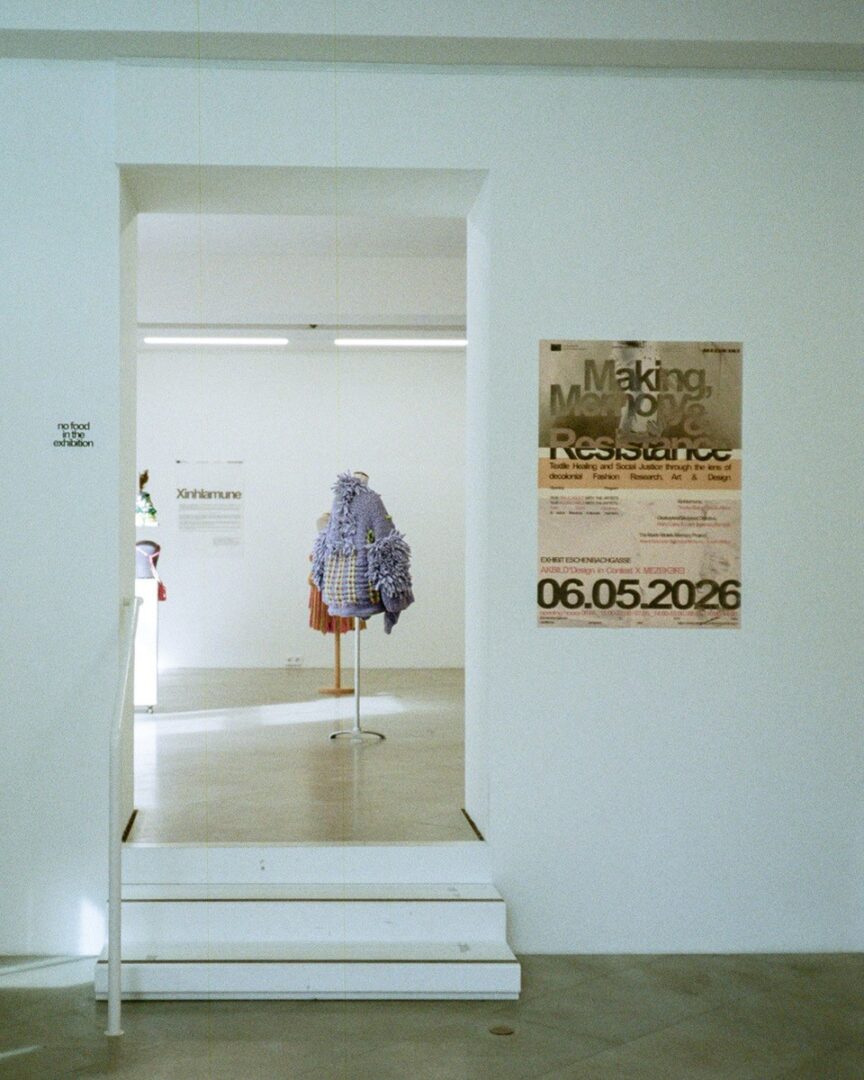
“Making, Memory and Resistance“
©AnnaHambira
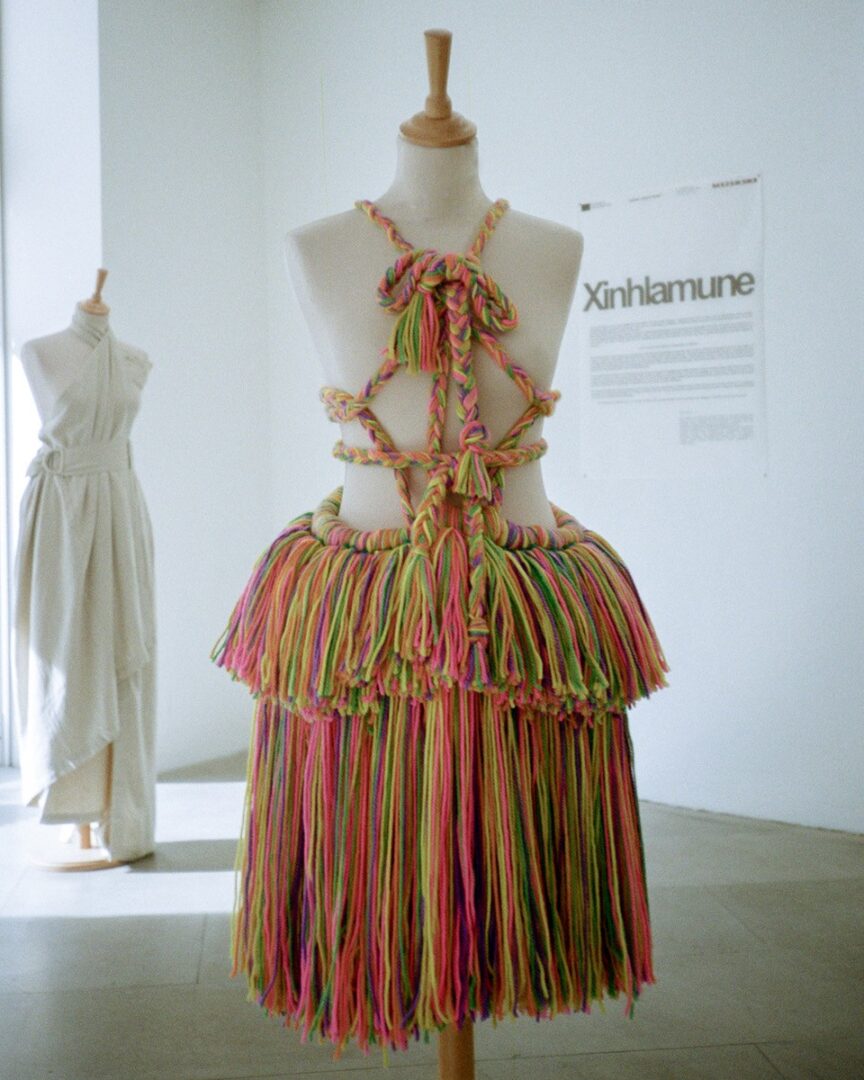
von Tinyiko Baloyi
©AnnaHambira
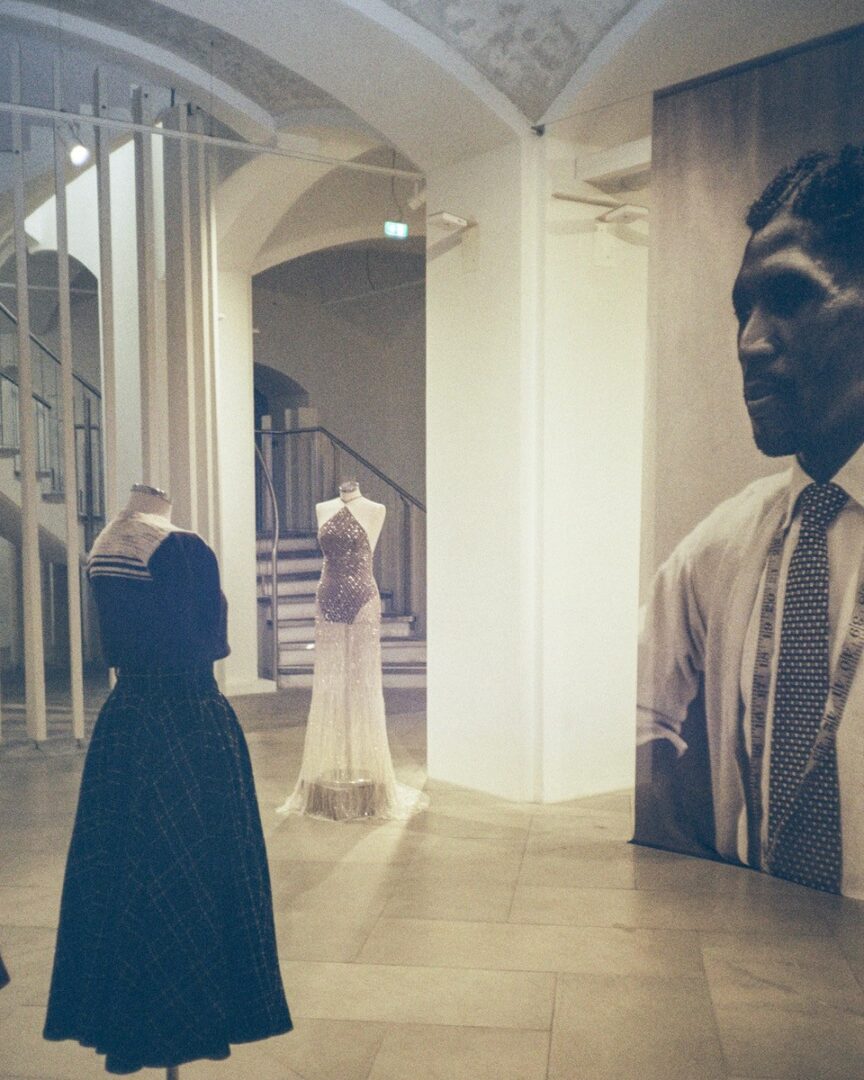
von Khaya Mchunu und Kiara Gounder
©AnnaHambira
During the summer semester of 2026, the teaching collaboration among the partners continued digitally. Maria Caley (University of Namibia) gave a lecture as part of the course “Connecting Threads—Teaching Formats for Design and Craft Practices” (Academy of Fine Arts, Anna Hambira) on the community project Penduka Embroidery Village, located in Katutura, a district of Windhoek, Namibia. The focus then moved to the first funding phase’s conclusion: the mobility and collaboration of students from the participating universities, which took place in the form of a Blended Intensive Programme (BIP) under Erasmus+ at the Academy of Fine Arts in Vienna in May 2026.
At the digital kick-off event in March 2026, students from the three universities came together for the first time and began their collaboration by responding to the question, “Which object would you pass on to a loved one?” The presentations “Memory and Touch, an Exploration of Textural Communication” by Loini Iizyenda of the University of Namibia and “Ontology of Objects” by Tinyiko Baloyi of the University of Johannesburg provided the students with initial input for their upcoming assignment within the framework of co-design. Working in teams of one student per university, the participants began preparing for the project week in May. Networking and collaboration with local practitioners in Vienna, as well as raising public awareness and visibility of the project, were also part of the preparations for the Erasmus+ Blended Intensive Programme (BIP). With support from the Cultural Forum Austria, based in Pretoria, the Fashions and Styles team was able to arrange the transport of artworks by their colleagues from South Africa to Vienna, in order to design a group exhibition at the Academy featuring these works alongside pieces by their colleagues from Namibia. Furthermore, a cooperation was established with the Vienna-based art space MEZEKƎRƎ, which is dedicated to the artistic practice of the Global Majority and its diaspora. MEZEKƎRƎ sees itself as a translocal space—a place of radical hospitality, encounter, and shared learning that connects local artists with international contexts. The annual program includes exhibitions, performances, concerts, readings, workshops, residencies, and community events.
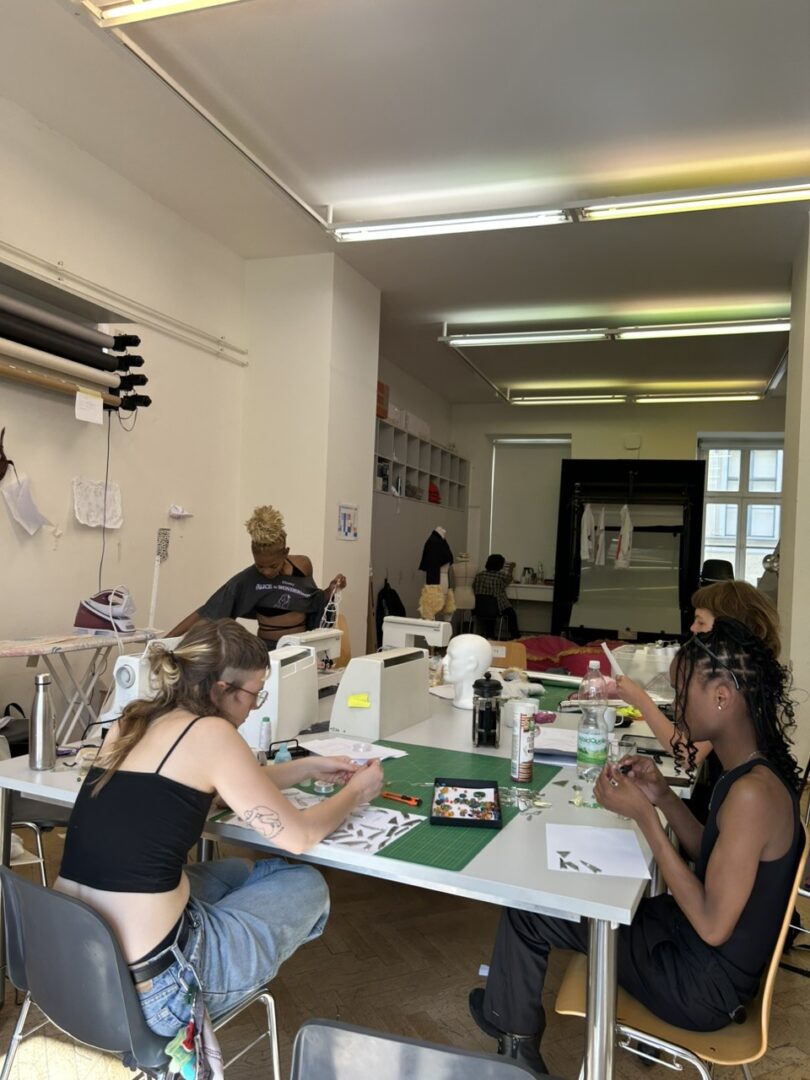
Upon their arrival on May 4, 2026, the team of the Academy of Fine Arts welcomed the international guests to a casual welcome picnic at the Stadtpark. Afterward, students from the University of Johannesburg and AKBILD began collaborating in pairs, for the first time outside the digital realm. Under the banner “OBJECTS, DESIGN, LIFEWORLDS, ENTANGLEMENT,” they developed co-designs over the following days: collaborative objects, garments, and artworks. At IKL, they were supported by workshop supervisors in various studios (sewing workshop, screen printing, and Mac room). At the same time, theoretical input sessions were held by faculty members from the three universities, featuring joint presentations, workshops, and visits to exhibitions. In the BIP studio, which was provided to the students for the duration of the project week, they were able to work independently, dream, and experiment outside the context of formal instruction.
The team of visiting faculty members was invited to a BIPOC-only dinner featuring an artist talk in honor of the Brazilian artist Gê Viana at the MEZEKƎRƎ art space. Gê Viana, whose large-scale soundsystem installations were most recently shown at the Rio de Janeiro Biennial, was currently participating in a MEZEKƎRƎ artist-in-residence program. This gathering of various actors from the Global Majority—and the recognition of the intersections in their individual artistic and research practices, with a focus on archives, memories, visual narratives, and counter-narratives left a feeling of connection and a spirit of new beginnings.
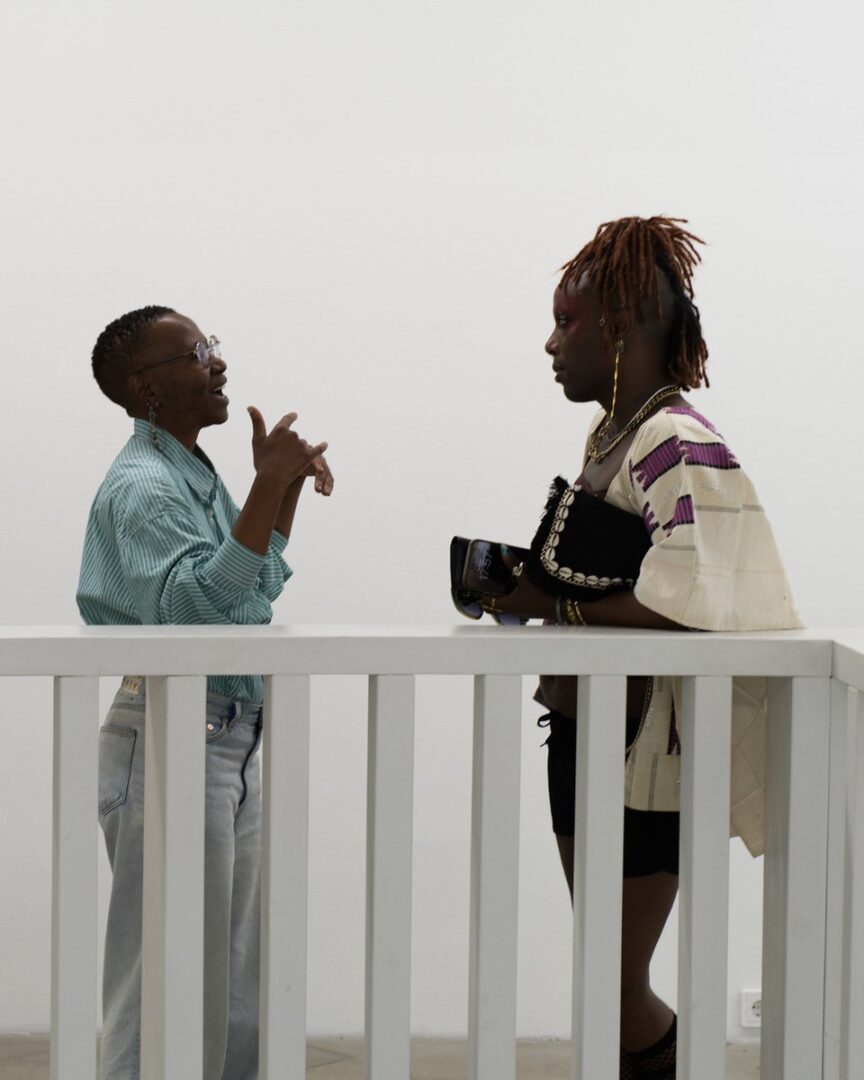
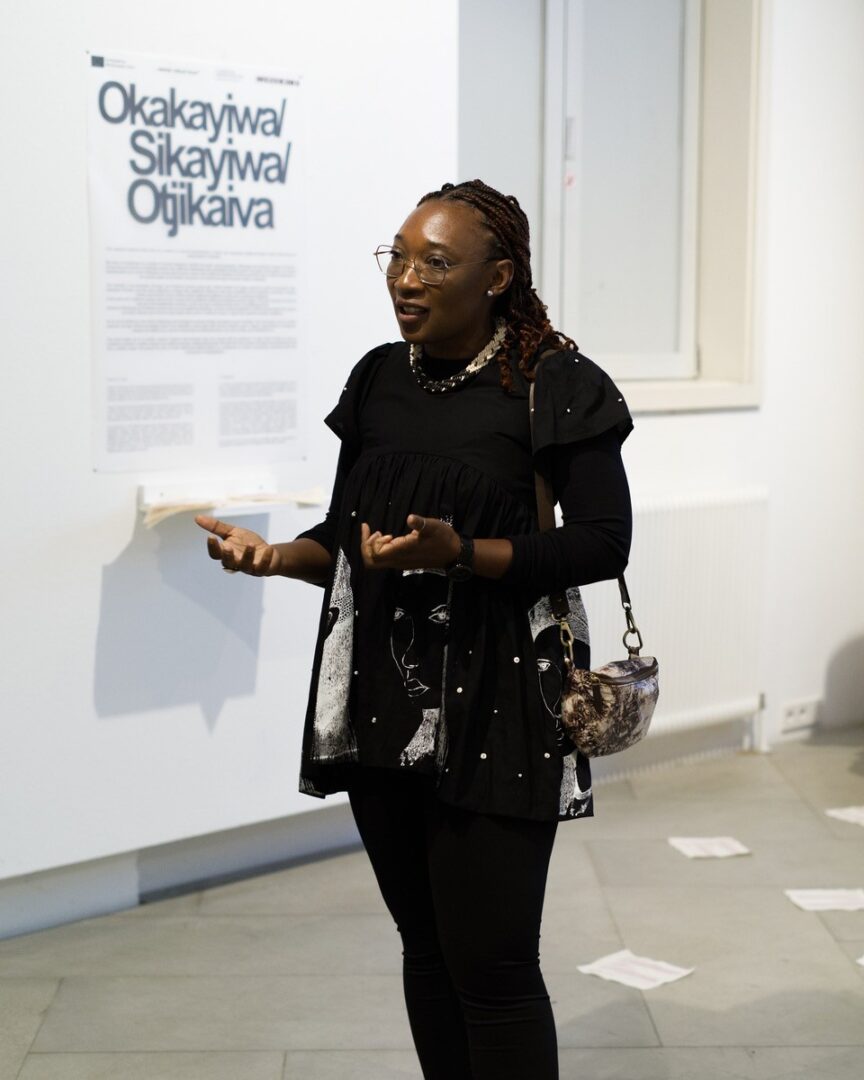
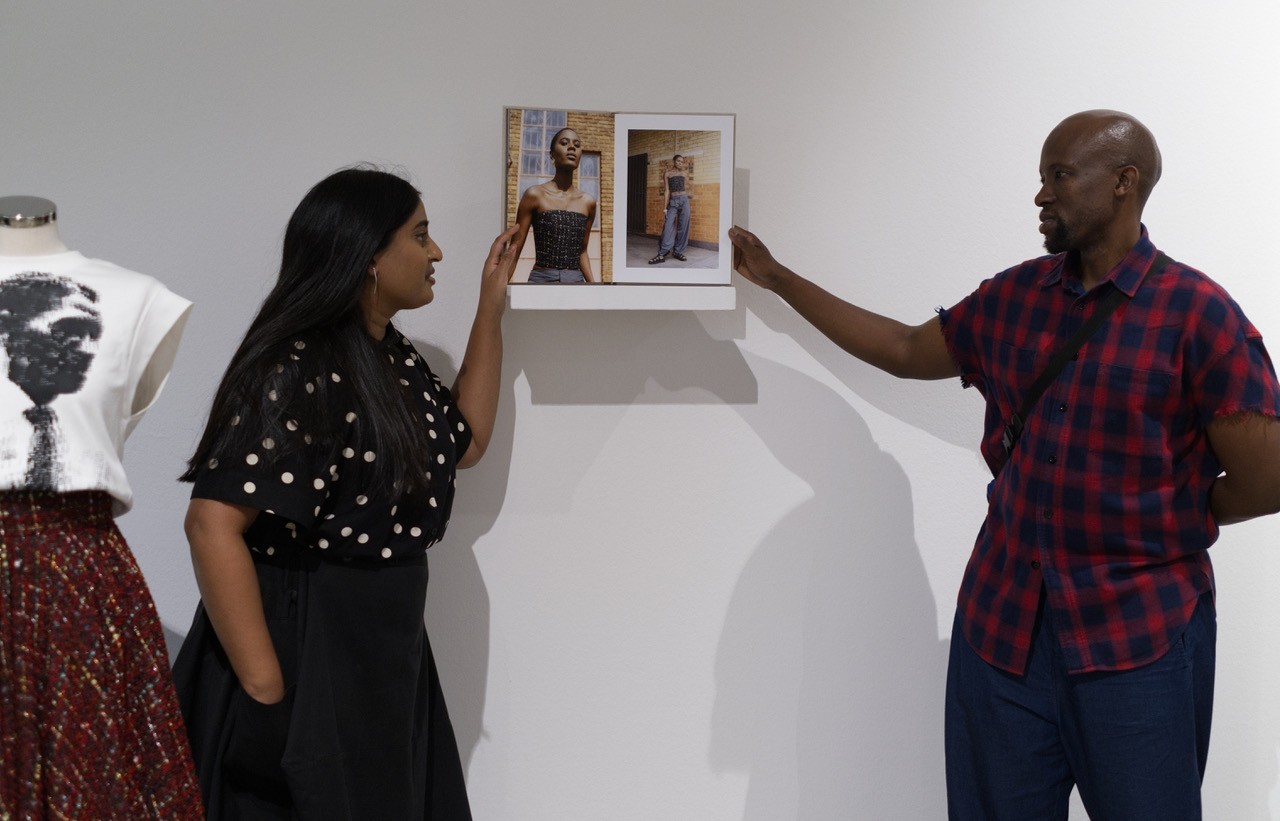
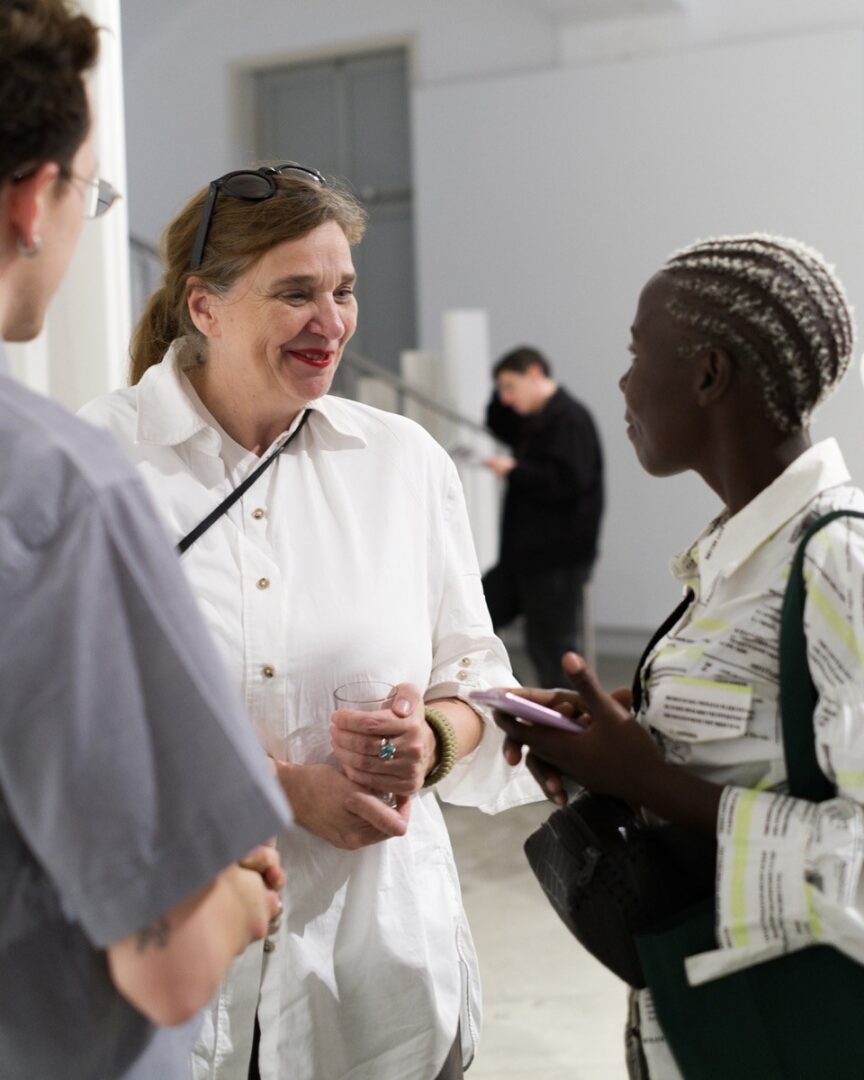
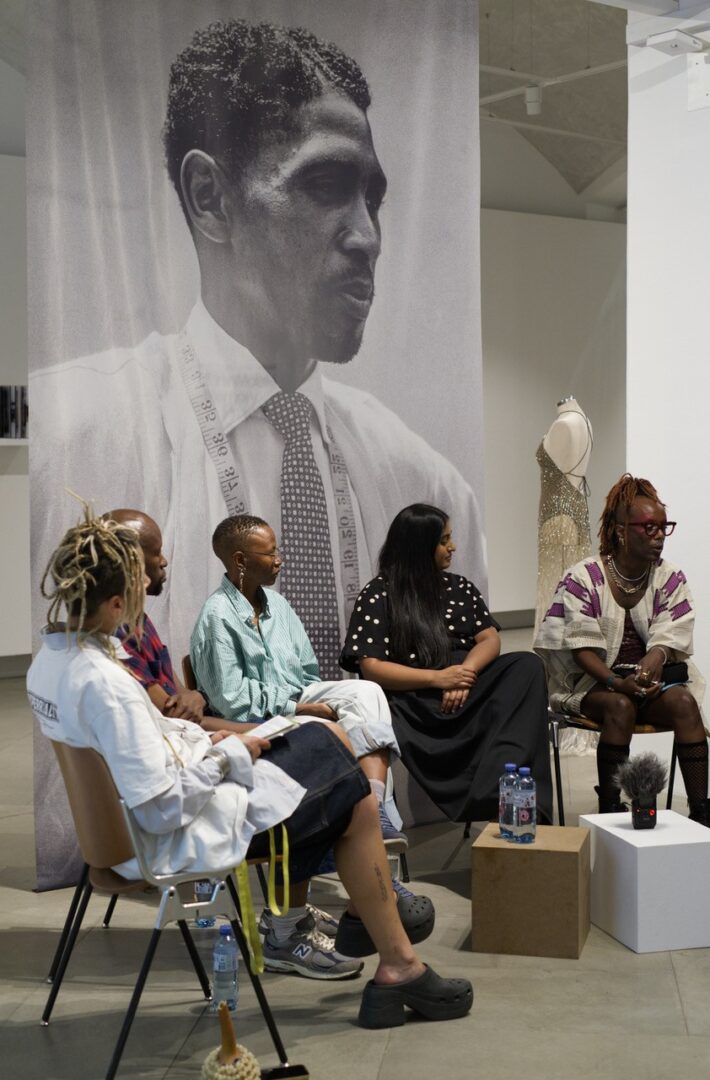
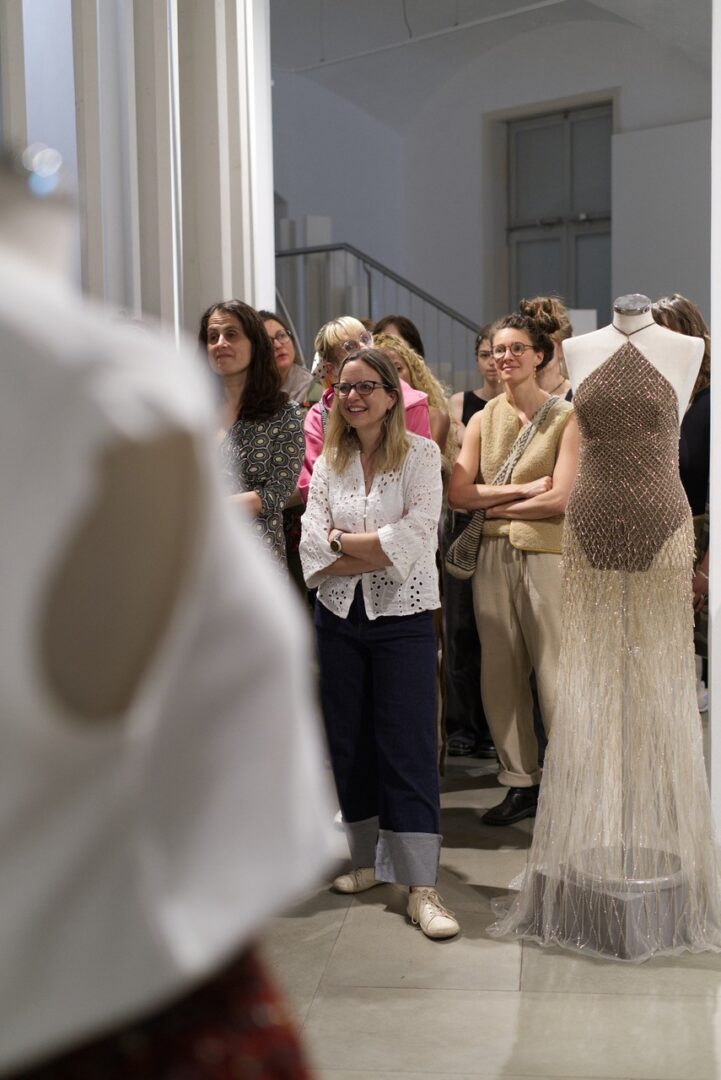
The Blended Intensive Programme (BIP) week featured a series of public events. On Wednesday, the exhibition “Making, Memory, and Resistance—Textile Healing and Social Justice through the Lens of Decolonial Fashion Research” opened at the Exhibit Eschenbachgasse gallery, presenting three independent positions by Khaya Mchunu and Kiara Gounder (South Africa), Maria Caley and Loini Iizyenda (Namibia), and Tinyiko Baloyi (South Africa). The exhibition featured research-based installations that explore textile practices as sites of memory, resistance, and healing. Moderated by Anna Hambira, the artists led the numerous guests through their artworks in Walk Abouts.
“Xinhlamune” by Tinyiko Baloyi is based on contemporary explorations of N’wana figures as living bearers of indigenous textile design practices in Tsonga culture. “Xinhlamune” is an expression of decolonial forms of knowledge, shaped by integration into family and community, initiation, and identity. The N’wana figures were co-designed with members of the artist’s family. Textile techniques such as weaving, knotting, and knitting are combined here with pattern making techniques based on construction and draping.
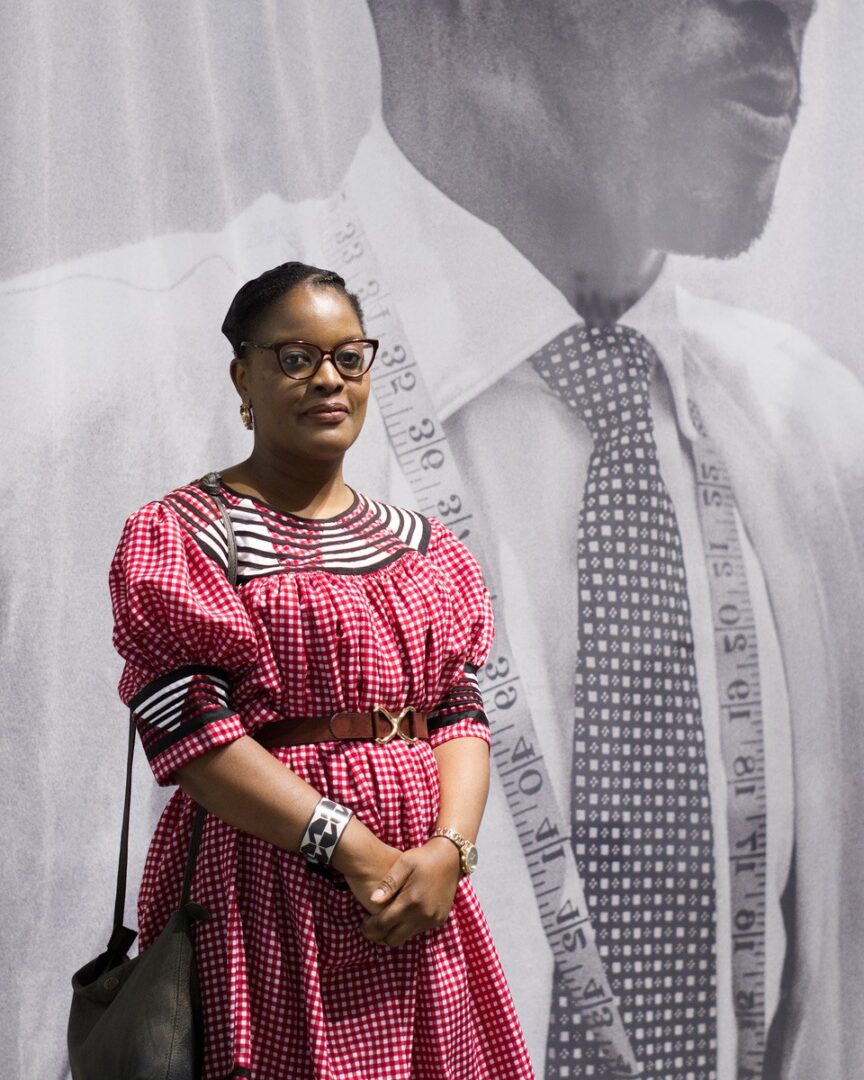
“The Martin Molefe Memory Project” by Khaya Mchunu and Kiara Gounder is dedicated to fashion designer Martin Molefe, who has been erased from collective design history. Molefe, who practiced in Soweto during the 1950s and 1960s during the so-called “racial segregation” of the apartheid system, first came to the attention of the two designers/researchers in an archive: on the pages of the magazine “Drum” under the title “Prince of African Fashion.” As part of the project, speculative garments were created in the designer’s signature style. Mchunu and Gounder moved beyond mere reproduction, took design decisions within the context of decolonization, and created contemporary garments through speculative design, deeply rooted in South African Black fashion history.
“Okakayiwa/Sikayiwa/Otjikaiva” by Maria Caley & Loini Iizyenda reveals the influence of colonial violence on the development of the various headscarf styles worn by Aawambo, Kavango, and Ovaherero women. The headscarf, used as a tool of oppression in the course of so-called missionary work, forcibly replaced indigenous hairstyles and head coverings and became an invasive intrusion into identity, belonging, and communication of those affected. The appropriation, deconstruction, and further development of the headscarf into diverse styles of dressing is a form of decolonial, identity-forming female resistance in both historical and contemporary daily life for members of the groups mentioned above.
Following the walkabouts, the designers/ researchers/ artists joined Anna Hambira for a Reflection Round meetup with Faris Cuchi Gezahegn. They are an intersectional LQBTQIA* activist, performance artist, PCCC stand-up comedian, poet, and active founding member of the MEZEKƎRƎ art space. Focusing on the theme “Joyful Resistance, Decolonial Archive Practices, Indigenous Knowledge & Textile Healing,” the participants reflected on shared questions during a public discussion. The following day, a publicly accessible workshop led by Tinyiko Baloyi (University of Johannesburg) took place at the MEZEKƎRƎ art space.
The closing event of the Blended Intensive Programme (BIP) week was the second exhibition on Eschenbachgasse, titled “Draft Exhibition: Objects, Design, Lifeworlds, Entanglement.” Here, the artworks developed during the week through co-design by teams of international students entered into multifaceted dialogues with the works of Tinyiko Baloyi, Maria Caley & Loini Iizyenda, and Kiara Gounder & Khaya Mchunu. “What Does Love Feel Like” by Olivia Gründler & Kathleo Kananelo Kivido, “Seen and Be Seen” by Lwazi Sigwaza & Nasch Neugebauer, “Who Are the Oiden? How Is the Oues?” by Sidonie Sagmeister & Nasief Davis, “Ya Lesedi, Strong Yet Tender” by Promise Mtshana and Sophie Dögl, and “Echo Bloom” by Kelebogile Thoka & Zoé Schwarz. The spectrum of works ranged from fashion installations to textile sculptures and performative interactions, as well as sound and text. The exhibition evolved into a blend of interwoven stories, shared observations, common perspectives, and experiences. At the same time, it embodied an open process at the intersection of encounter, negotiation, and transformation.
Now that funding from the EU’s ERASMUS+ International Credit Mobility programme has concluded, the goal is to travel back to Johannesburg, bringing the artworks and invite local artists and cultural practitioners, as well as other students from Johannesburg, to further develop the exhibition with their own creations, fostering decolonial perspectives on fashion, design, art, and material culture, and to open up further spaces for agency and critical reflection.
Related Links
The Reflection Round, focusing on “Joyful Resistance, Decolonial Archive Practices, Indigenous Knowledge & Textile Healing,” will be released in three parts as a GLOBAL CLASSROOM video podcast.
Link to the GLOBAL CLASSROOM video playlist:
https://youtube.com/playlist?list=PLuCTZj0Un4eLO36aoX2roQN4gEzbnq1qW&si=B-nk-2q[1]Wmkwpz8s
Link to the GLOBAL CLASSROOM Podcast:
https://open.spotify.com/show/5XFm3201kTssnt9b6Jv9Kl
https://music.amazon.ca/podcasts/7e2a6f0f-b975-45ee-82d4-e46225fb46b8/global-classroom
MEZEKƎRƎ Art Space:
https://www.mezekere.com/
https://www.instagram.com/mezekere_/?utm_source=ig_web_button_share_sheet
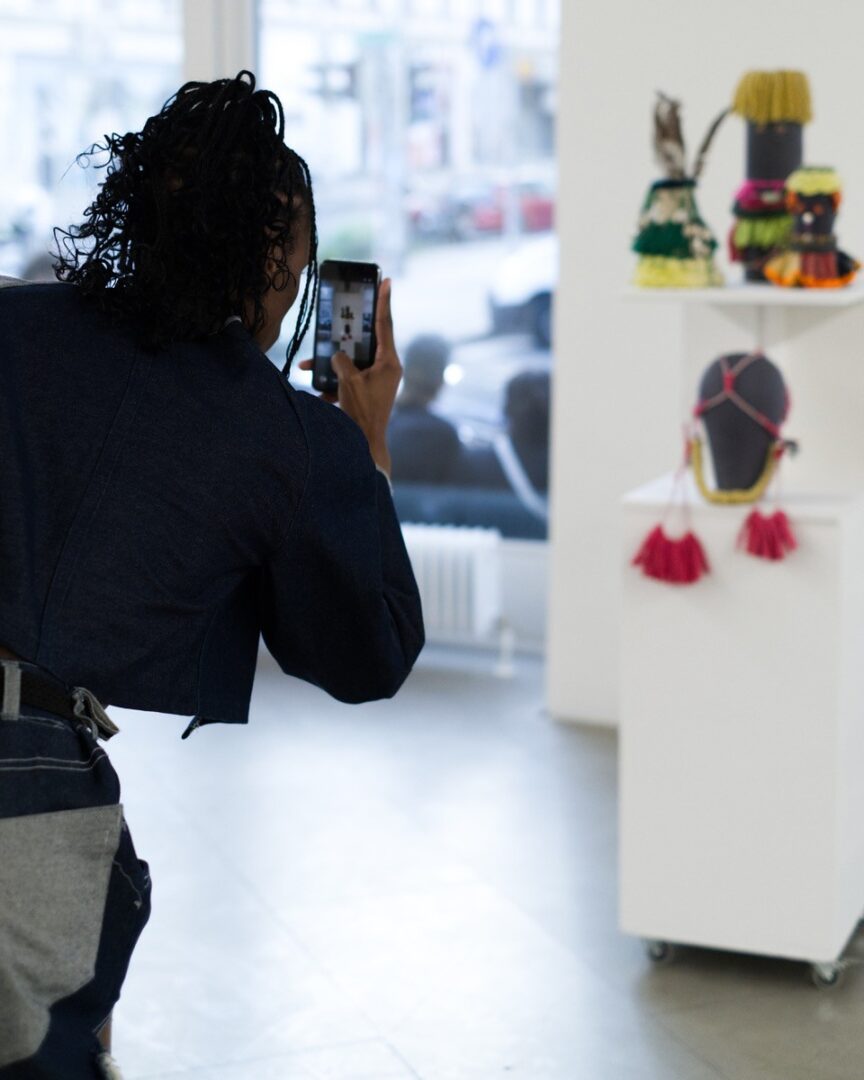
©SidonieSagmeister/AnnaHambira
©SidonieSagmeister/AnnaHambira
©SidonieSagmeister/AnnaHambira
©SidonieSagmeister/AnnaHambira
©SidonieSagmeister/AnnaHambira
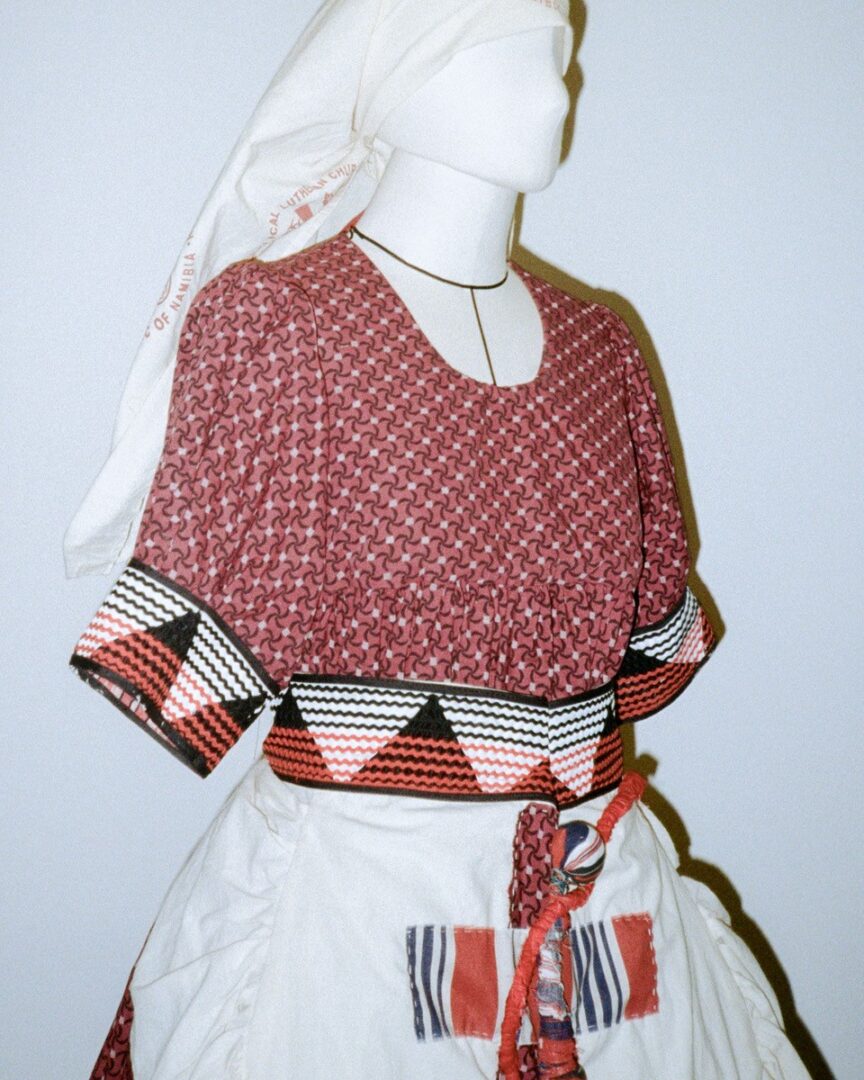
von Maria Caley & Loini Iizyenda
©AnnaHambira
©SidonieSagmeister/AnnaHambira
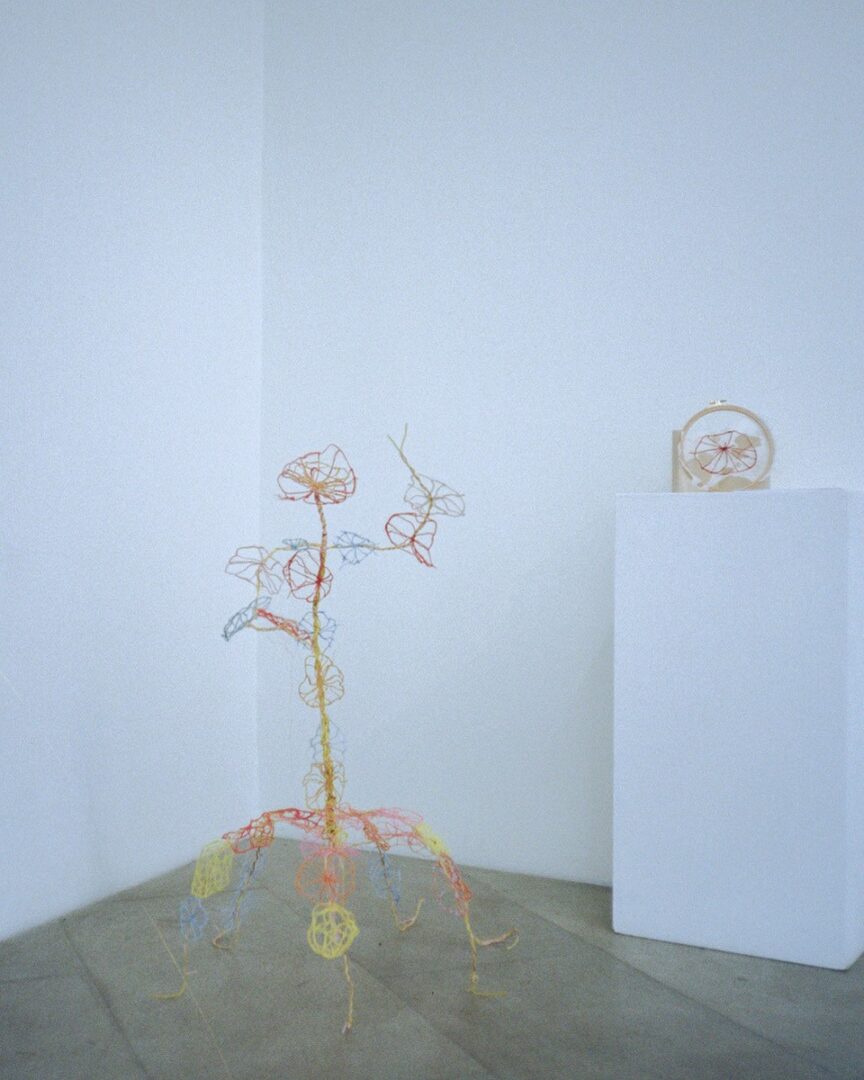
von Kelebogile Thoka & Zoé Schwarz
©AnnaHambira
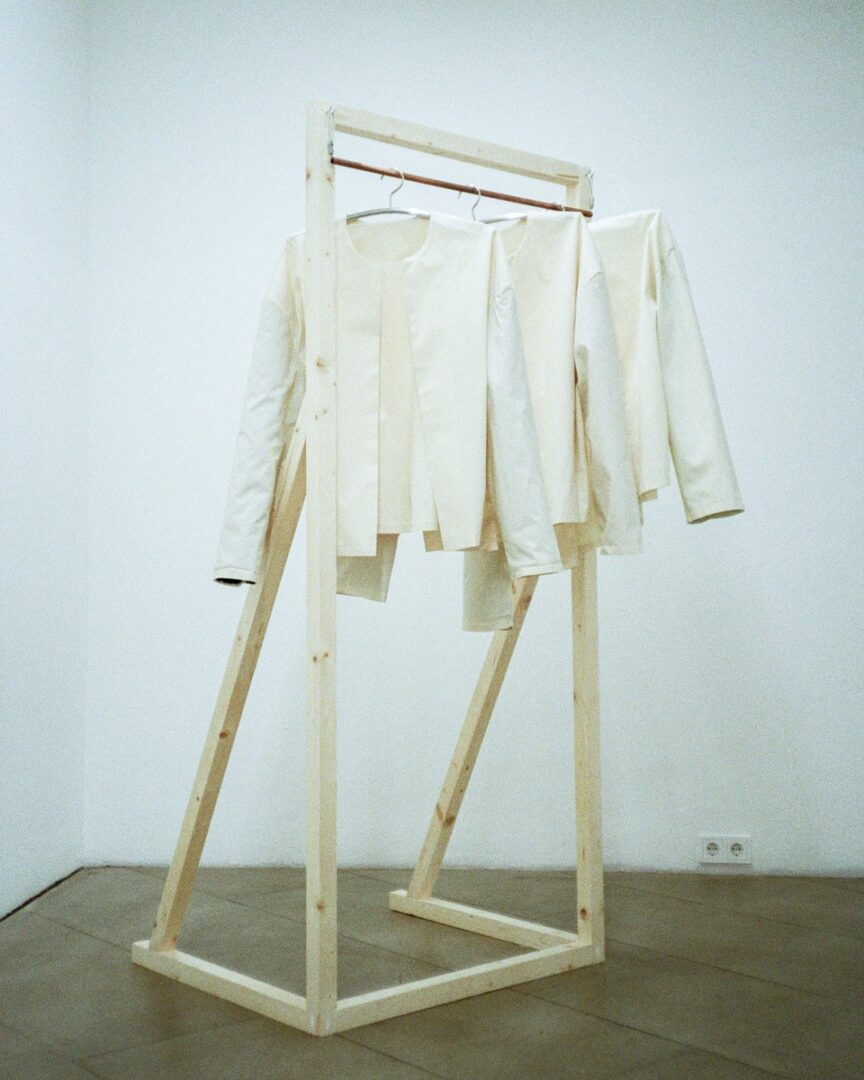
von Olivia Gründler & Kathleo Kananelo Kivido
©AnnaHambira
©SidonieSagmeister
©SidonieSagmeister
©SidonieSagmeister